
Off-grid caravanning sounds appealing to a lot of people.
Freedom, quiet locations, fewer crowds and the ability to travel beyond busy caravan parks. It’s easy to see why more Australians are becoming interested in it.
But off-grid travel is also one of those things that looks very different online compared to real life.
At Find My Van, we speak with many buyers who assume they need a fully off-grid setup, only to realise later that their actual travel style is much simpler.
For others, off-grid capability completely changes how they travel and where they can go.
The key is understanding what off-grid caravanning is really like before investing heavily into it.
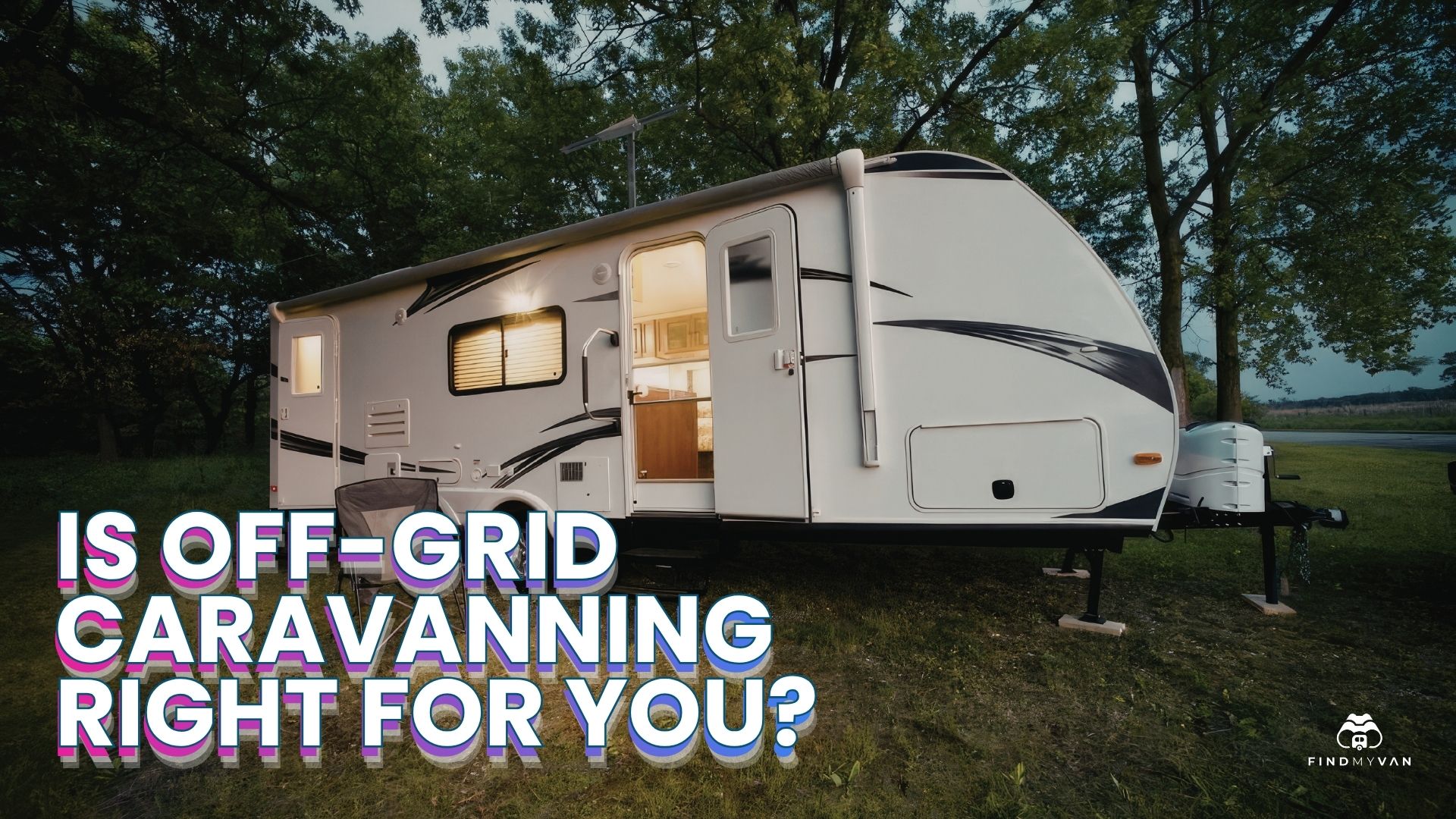
What does off-grid caravanning actually mean?
Off-grid caravanning simply means travelling without relying on powered caravan park sites or constant external services.
Instead of plugging into power and water at a park, your caravan supports itself using onboard systems.
That usually includes:
- Solar panels
- Batteries
- Water tanks
- Gas systems
- Inverters and charging systems
The level of off-grid capability varies between caravans. Some are designed for a few days away from powered sites, while others are built for extended remote travel.
Why so many travellers are drawn to off-grid travel
For many people, the appeal is not just about saving money or avoiding caravan parks.
It’s about flexibility.
You are not tied to bookings, powered sites or crowded holiday periods. You can stop in quieter areas and travel at your own pace.
What attracts people most is often:
- More privacy and space
- Access to remote locations
- Less crowded travel experiences
- Greater freedom in planning trips
What it’s really like is slowing down and feeling less dependent on infrastructure around you.
The reality most first-time buyers don’t expect
This is where expectations and reality can separate quickly.
A lot of buyers imagine themselves travelling deep into remote Australia constantly. In reality, many still spend a large amount of time in caravan parks or established campgrounds.
Off-grid setups also come with more responsibility.
You need to think about:
- Power usage
- Water consumption
- Battery charging
- Storage and weight
What it’s really like is becoming more aware of how you use resources every day.
Off-grid caravanning is not just about solar
This is one of the biggest misconceptions.
Solar panels are important, but they are only one part of the setup.
A good off-grid caravan also needs:
- Adequate battery storage
- Water capacity
- Efficient appliances
- Suitable suspension and tyres for intended travel
Without balance between these systems, the setup can quickly become frustrating.
For example, having large solar capacity means very little if your water storage limits how long you can stay away.
Consider where you actually want to travel
This is the part buyers should think about carefully.
If most of your travel will involve:
- Caravan parks
- Coastal touring
- Short trips
- Regional towns
You may not need an extreme off-grid setup.
However, if you want to:
- Free camp regularly
- Travel remote roads
- Stay away from powered sites for extended periods
- Then investing in stronger off-grid capability makes much more sense.
The goal is matching the setup to your actual travel plans, not the version you think sounds most adventurous.
Off-grid caravans are usually heavier
This catches many buyers out.
More batteries, larger water tanks, solar systems and upgraded suspension all add weight.
That affects:
- Towing
- Fuel consumption
- Vehicle compatibility
- Payload
This is why understanding your tow vehicle matters just as much as choosing the caravan itself.
Off-grid setups can become expensive quickly
Off-grid caravans often cost more upfront because of the additional equipment involved.
Upgrades commonly include:
- Lithium batteries
- Large solar systems
- Inverters
- Additional water storage
- Off-road suspension
The important question is whether you will genuinely use those features enough to justify the cost.
For some travellers, absolutely.
For others, it becomes capability they rarely use.
What off-grid caravanning is really like
The lifestyle itself is often quieter and slower than people expect.
You become more aware of:
- Where you stop
- How long you stay
- Your water and power usage
- Weather conditions
For many travellers, that becomes part of the enjoyment.
For others, they realise they prefer the convenience and simplicity of caravan parks.
Neither approach is wrong.
How Find My Van helps buyers choose properly
At Find My Van, we help buyers work out whether off-grid caravanning genuinely suits their travel style before they commit to a setup.
We help you:
- Understand what level of off-grid capability you actually need
- Match caravans to your travel plans and tow vehicle
- Avoid overcomplicating the decision
- Compare realistic options based on how you plan to travel
Every caravan we help you purchase comes with a current independent presale inspection report, so you know exactly what you are buying.
Off-grid travel is not about being extreme
It is simply about having more flexibility in where and how you travel.
For some people, that completely changes their caravanning experience. For others, a simpler setup makes more sense.
Ready to find the right setup?
If you are considering off-grid caravanning and want help understanding what suits your lifestyle best, we can help.